
Pfauter Red Ball Express Motor Pool
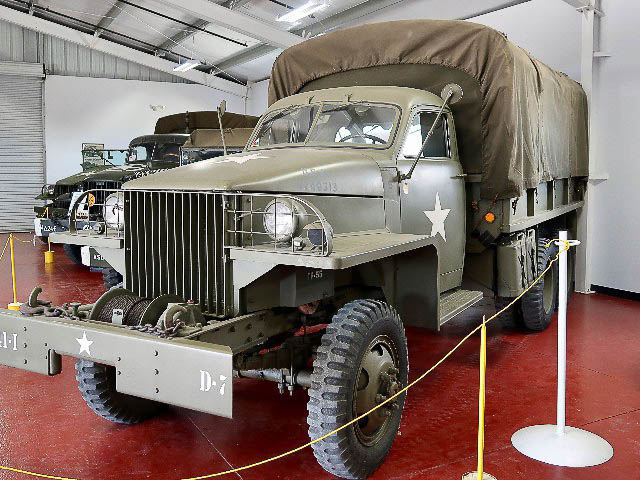
The Red Ball Express Motor Pool at Estrella Warbirds Museum, is a collection of vintage U.S. military vehicles from 1941 through 1945 assembled by Herman Pfauter, a collector and restorer of these vehicles since his teenage years.
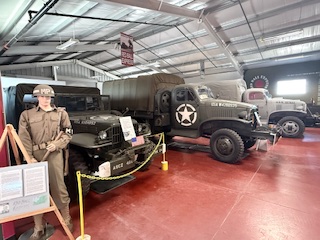
The Red Ball Express earned its name immediately following the landing of allied troops at Normandy. In order to expedite the shipment of supplies to the front lines, trucks emblazoned with red balls followed a similarly marked route that was closed to civilian traffic. The red ball signature sign also gave the supply vehicles priority on regular roads. Conceived in an urgent 36 hour meeting, the convoy system began operating on August 25, 1944 and was instrumental in providing the behind-the-scenes support to the US and allies progress forward during the war.
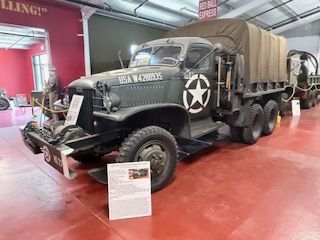
The Red Ball Express in WWII
The “Red Ball Express” was conceived in an urgent 36-hour planning session following the Allied landing at Normandy in 1944. To keep supplies moving quickly to the front lines, trucks emblazoned with red ball markings followed a special route closed to civilian traffic, with priority over other vehicles on regular roads.
The system began operating on August 25, 1944 and at its peak ran 5,958 vehicles, staffed largely by African-American soldiers. Together they carried about 12,500 tons of supplies per day for 83 straight days—until November 16, when Antwerp’s port facilities opened, French rail lines were repaired, and portable gasoline pipelines were deployed. The Express was crucial in sustaining the Allied advance across Europe.
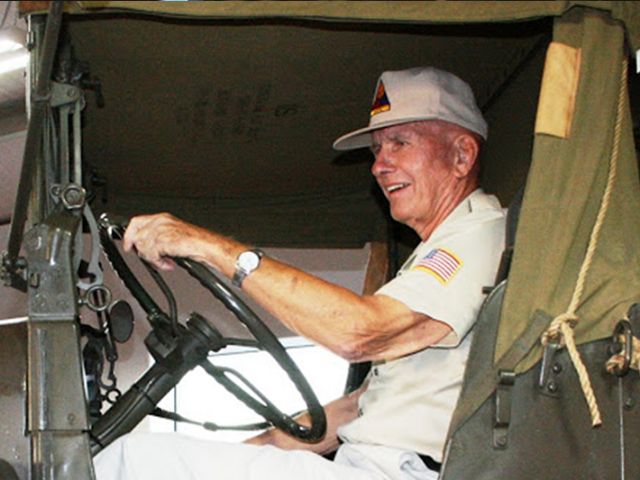
Herman Pfauter’s Story
When Germany was liberated in 1945 by the Allies, Herman was 9 years old. He first watched with amazement the endless columns of Russian soldiers who occupied his hometown of Chemnitz. Most of them traveled on foot or with horse-drawn wagons but there were also a number of motor vehicles, mostly of American manufacture, never seen before in Germany such as the Jeep, the Dodge Weapons Carrier and the 2½-Ton Studebaker 6×6 cargo truck.
Soon after the entire family moved to the British-occupied zone of Germany where there were again new vehicles from the British army. But even the Brits had a large number of American vehicles. Finally the family moved once again, this time to the American zone in southern Germany. Here every vehicle of the U.S. Army was represented and Herman was fascinated with the looks, the sounds and everything else that made these vehicles so special. Many hours he spent in and around motor pools and became friendly with the GI’s driving and repairing the various trucks. While still in high school he bought his first Willys Jeep from the local Army Chaplain for $200. It was running and even had an enclosed aluminum cab and a heater.
By high school, Herman purchased his first Willys Jeep from a U.S. Army chaplain for just $200. That Jeep, complete with an aluminum cab and heater, was the start of a lifelong passion for collecting and restoring U.S. military vehicles.
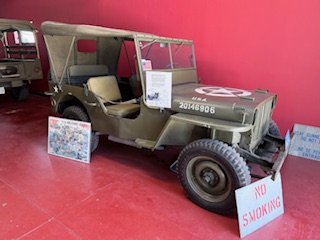
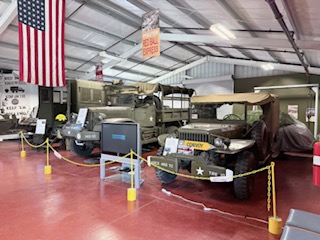
Today, Herman’s remarkable collection of restored WWII vehicles (1941–1945) is proudly displayed at Estrella Warbirds Museum. Visitors can see an array of authentic trucks, Jeeps, wreckers, and personnel carriers—meticulously restored to their original condition, honoring the history of the men and women who relied on them in wartime.
The Collection
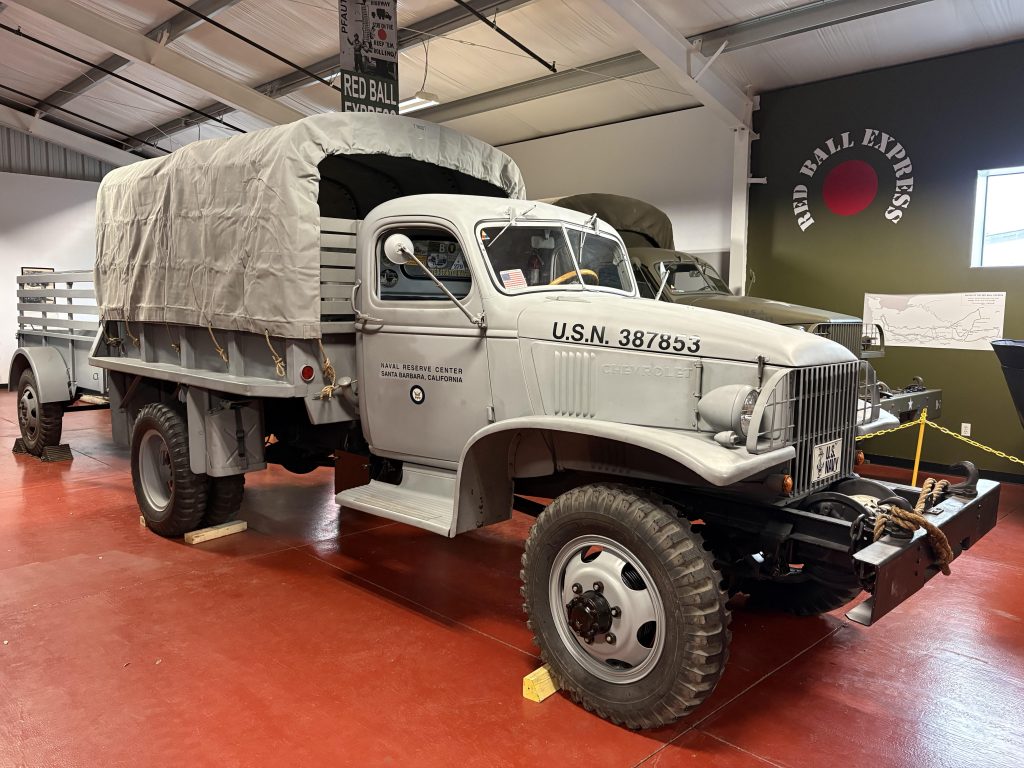
1942 Chevrolet (G7117) 1.5-ton 4×4 Cargo Truck
The G7117 was the cargo (with winch) variant of the Chevrolet G506. Of the 154,204 produced by Chevrolet, 26,207 were of the G7117 variant. This vehicle was used as a light- to medium-transport truck by Allied Forces in WWII.
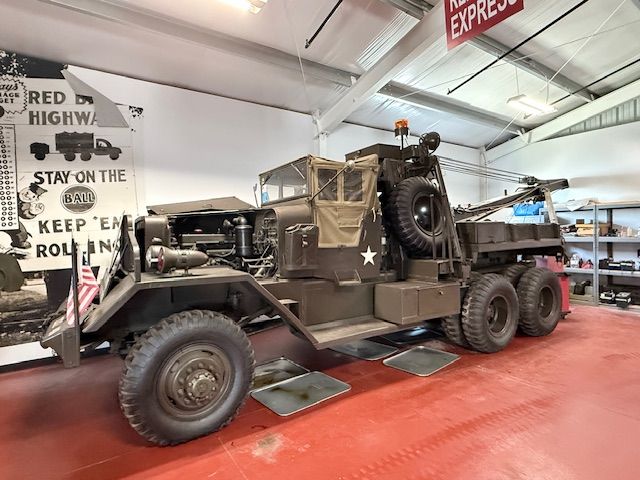
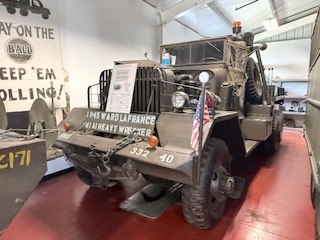
1945 Ward La France M1A1 6 ton, 6×6 wrecker
3800 wreckers of this type were produced. Its maximum tow load was 70,000 pounds, allowing it to salvage any wheeled vehicle in the U.S. Army inventory as well as light and medium tanks, downed aircraft and bridging pontoons.
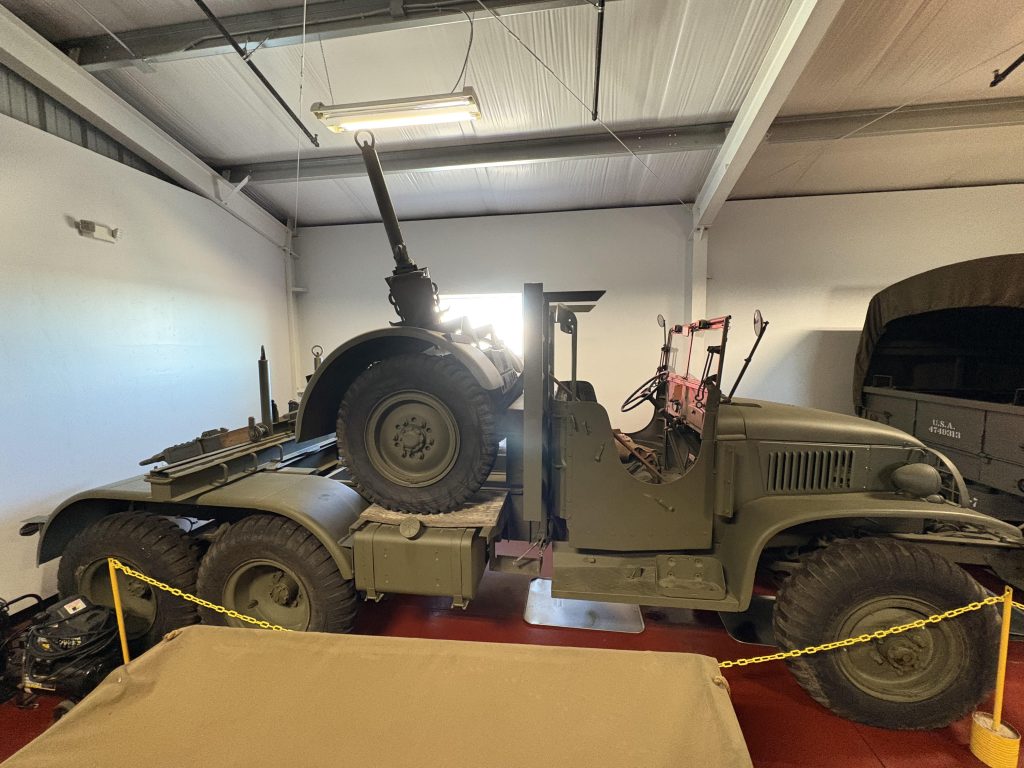
1945 GMC CCKW 353 2.5 ton, 6×6 Bolster Truck (with Slip Pole Trailer)
The CCKW was a mainstay for Allied Forces in WWII. The CCKW Bolster trucks were used to carry the M4 floating pontoon bridge. Using the slip pole trailer the truck could carry two halves of the pontoon bridge including planking for the bridge.
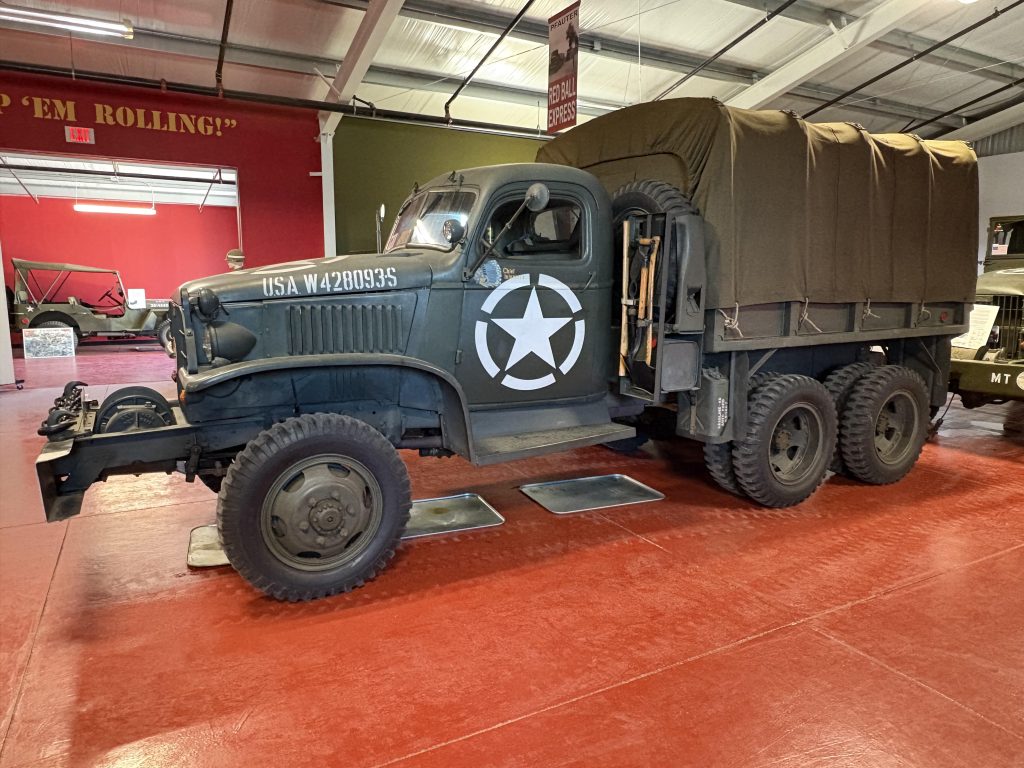
1942 GMC CCKW 352 (G508) 2.5-ton Truck 6×6 (Cargo)
572,500 units of the GMC and all its variants were built. This truck was one of the few that was built with a front winch. This truck served in both the U.S. Army and the Danish Army.
1943 Ford GPW
This Jeep was one of 300,000 produced between 1941 and 1945 by the Ford Motor Company. This Jeep is representative of the “Motor Pool Class.” It is original and correct in every detail.
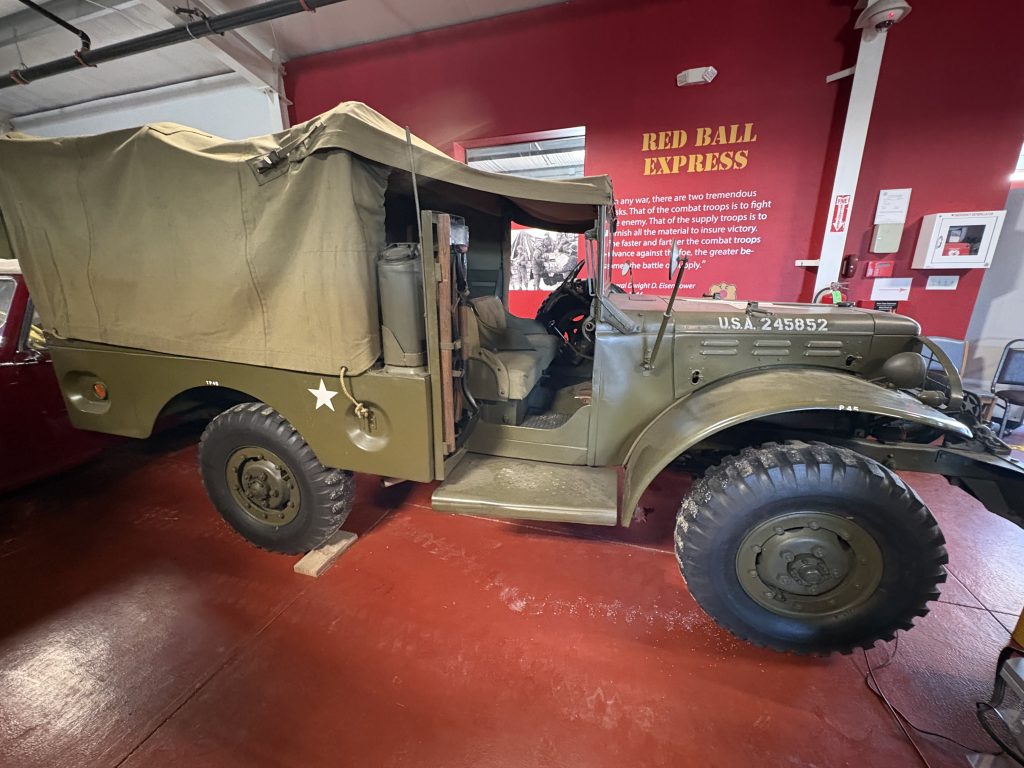
1944 Dodge WC 52 4×4 3/4 Ton Weapons Carrier
Over 200,000 were built from 1942-1946. This model truck served in all theaters of the war. As the United States got deeper into the war the military needed a more rugged truck with a lower silhouette and greater cargo carrying capacity.
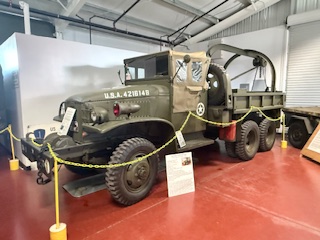
1943 GMC CCKW 352 2.5 Ton 6×6 (Ordnance Truck)
This truck served in the French Army after service with the U.S. Army in WWII. Herman Pfauter acquired the truck in 1993 from a German surplus dealer. It was shipped to the U.S., where it was restored to the original configuration when used by the U.S. forces.
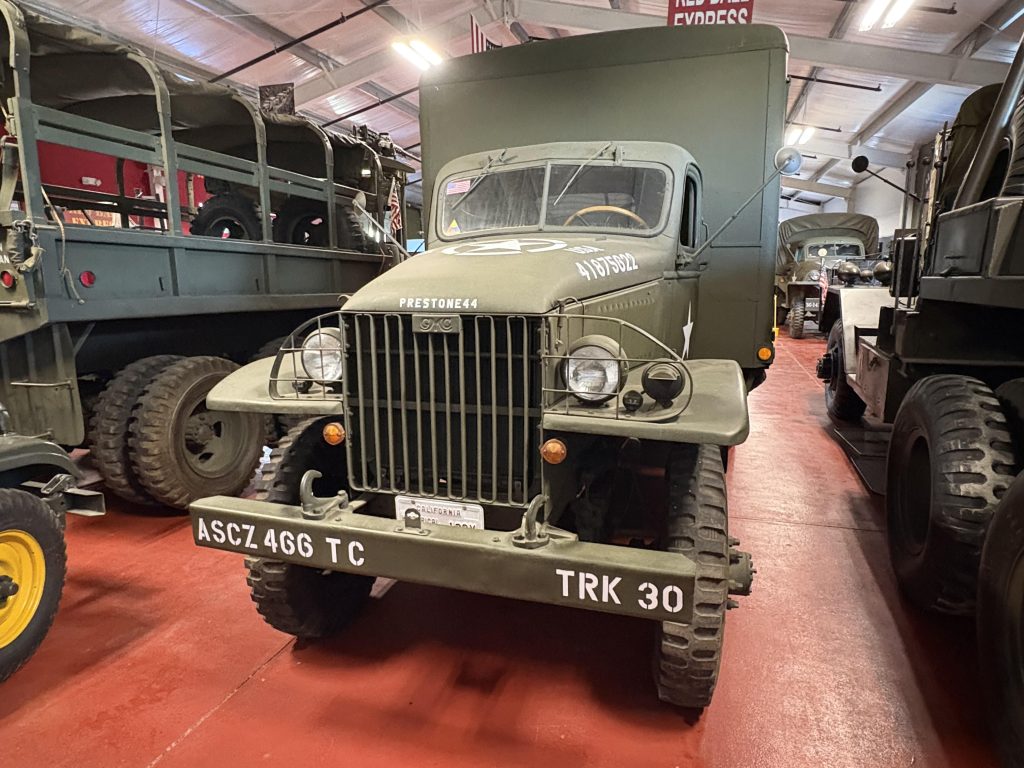
1943 GMC CCKW 353 M16A1 (G146) Work Truck 2.5-ton Truck 6×6 (Machine/ Workshop Truck)
This vehicle, fitted with a complete work shop, carried all the tools necessary for servicing and repairing vehicles of the Red Ball Express.
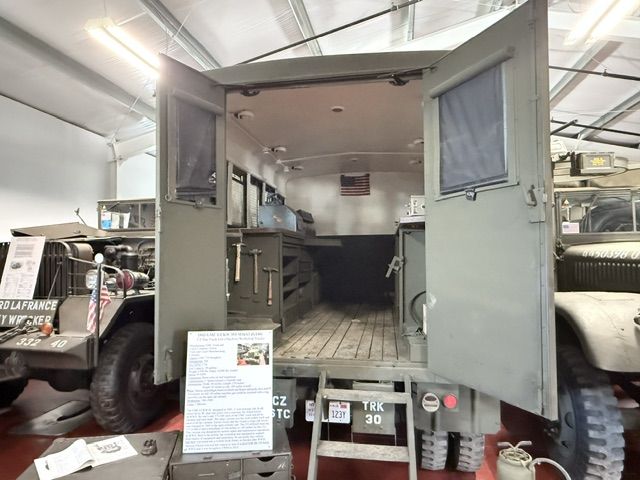
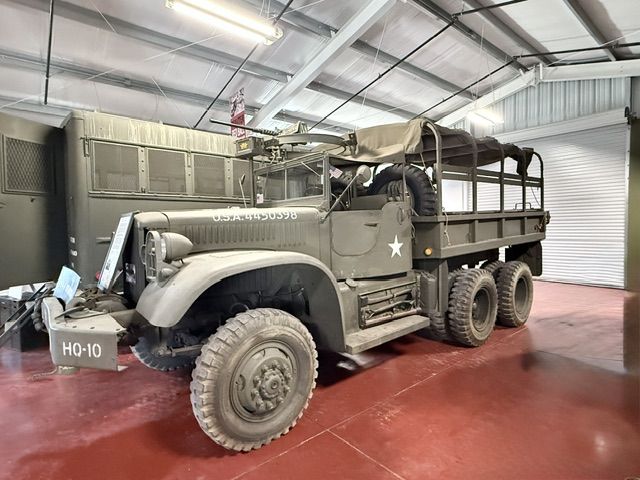
1944 Diamond T 968A 4 Ton 6×6 Cargo Truck
This truck, built in August of 1944 by the Diamond T Motor Car Company in Chicago, was the principal 4 ton truck of the US Army during WWII. Considered the “Cadillac of American Trucks:” it was a tough, reliable truck found in every theater of WWII. Its rugged design and total reliability were much appreciated by the American soldiers.
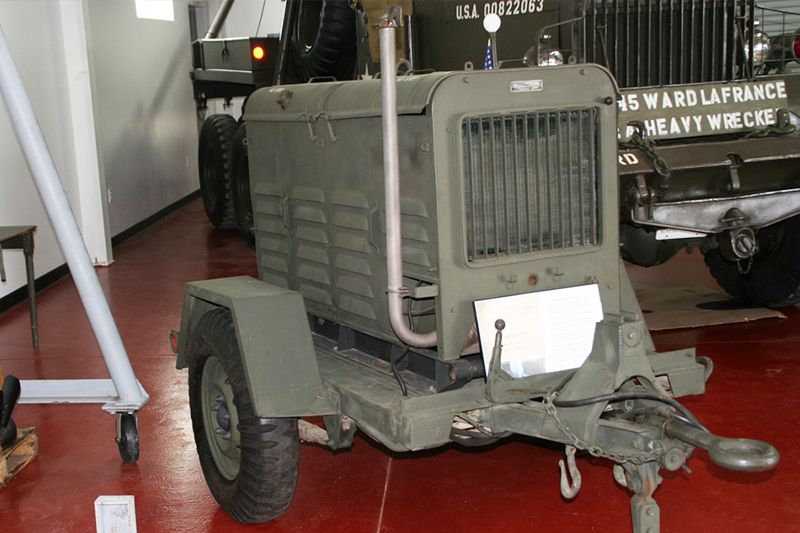
This mobile power unit uses a 134 CID Willys Jeep four-cylinder gasoline engine coupled directly to an ONAN AC generator. Operating at 1,800 RPM and producing 35 horsepower, the engine powered a 10 kW, 120/240-volt generator. Fuel consumption was approximately 1.1 gallons per hour, and the complete unit weighed 1,556 pounds.
These generators supplied electrical power for military radio equipment and other field applications.
History
Staffed primarily with African-American soldiers, the Express, at its high point, was operating 5,958 vehicles that carried about 12,500 tons of supplies a day. It ran for 83 days until November 16, when the port facilities at Antwerp, Belgium, were opened, enough French rail lines were repaired, and the portable gasoline pipelines were deployed. For more history on the Red Ball Express visit this link.